Coreless Motor vs. Standard Brushless Motor: A B2B Guide to Precision Selection
Coreless Motor vs. Standard Brushless Motor: A B2B Guide to Precision Selection
When designing next-generation medical devices, robotics, or aerospace systems, choosing the right motor architecture is critical. Two technologies frequently dominate high-performance discussions: Coreless Motors (Slotless BLDC) and Standard Brushless Motors (Slotted BLDC).
While both share a lineage of efficiency and reliability, their radical structural differences dictate entirely different application strengths.
This technical guide breaks down the core similarities, fundamental differences, and strategic selection criteria to help you optimize your next engineering project.
1. Technical Commonalities: The Shared DNA
Before diving into the differences, it is important to understand why both motor types are favored in high-end automation and precision motion control:
-
Permanent Magnet Direct Current (PMDC) Drivers: Both architectures rely on the interaction between high-performance rare-earth permanent magnets and winding currents to generate torque.
-
Electronic Commutation (Brushless Longevity): Both standard BLDC and slotless/coreless brushless motors utilize electronic controllers combined with Hall-effect sensors or sensorless algorithms. This eliminates the mechanical wear, sparking, and acoustic noise associated with traditional carbon brushes, yielding a lifespan of tens of thousands of hours.
-
Superior Efficiency and Low Noise: Advanced electromagnetic designs allow both systems to achieve peak efficiencies of 85% to 95%, operating with minimal vibration and low electromagnetic interference (EMI).
-
High-Precision Servo Compatibility: Both configurations integrate seamlessly with high-resolution encoders for precise closed-loop speed, position, and torque control.
2. Coreless vs. Standard BLDC: Key Technical Differences
The primary differentiator lies in the anatomy of the stator and rotor, which directly influences their performance metrics.
Stator and Rotor Structure (The Root Difference)
-
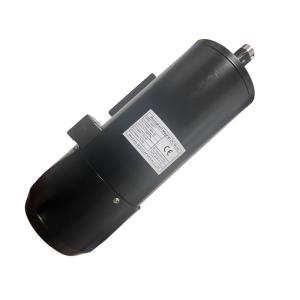
Standard BLDC Motors (Slotted): These feature an iron-core design. The stator consists of laminated silicon steel sheets with slots where the three-phase copper windings are embedded. The rotor contains the permanent magnets. This iron-core structure inherently introduces cogging torque (magnetic latching) and iron losses (eddy currents).
-
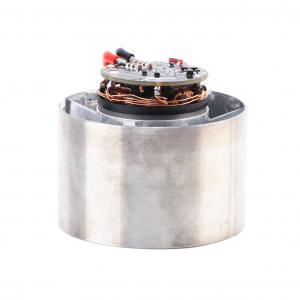
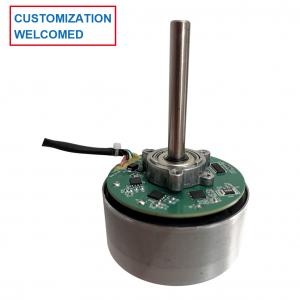
Coreless Brushless Motors (Slotless): These feature a coreless design. The copper windings are wound into a self-supporting, basket-like cylindrical shape without an iron core. Because there are no silicon steel laminations in the air gap, cogging torque is completely eliminated, and eddy current losses are virtually zero.
Dynamic Response and Rotor Inertia
-
Standard BLDC Motors: The iron core adds significant mass, resulting in higher rotor inertia. The mechanical time constant typically ranges from 20ms to 50ms, making them more suited for continuous, steady-state power transmission.
-
Coreless Motors: Lacking a heavy iron core, the rotor (or slotless stator assembly) is incredibly lightweight, resulting in ultra-low rotor inertia. With a mechanical time constant often under 10ms, they deliver millisecond-level start-stop and reversal cycles.
Power Density and Thermal Dynamics
-
Standard BLDC Motors: These excel at sustained high-torque output across a broad power spectrum (from watts to kilowatts). Their iron core acts as a thermal sink, providing robust overload capabilities for heavy industrial loads.
-
Coreless Motors: They boast an exceptional power-to-weight ratio, making them ideal for miniaturization. However, because the self-supporting coils have low thermal capacity, they are sensitive to thermal overloads and are generally restricted to lower power thresholds (typically under 200W).
3. Coreless vs. Standard Brushless Motor Comparison Table
| Performance Metric | Standard Brushless Motor (Slotted) | Coreless Brushless Motor (Slotless) |
| Core Architecture | Laminated Silicon Steel Iron Core | Self-Supporting Basket Winding (No Iron Core) |
| Cogging Torque | Present (Causes minor low-speed cogging) | Zero Cogging (Perfectly smooth rotation) |
| Mechanical Time Constant | 20ms – 50ms | < 10ms (Ultra-fast dynamic response) |
| Rotor Inertia | Medium to High | Extremely Low |
| Power Range | Wide (Up to Kilowatts) | Low to Medium (Typically < 200W) |
| Overload Capacity | Excellent | Limited (Sensitive to current spikes) |
| Manufacturing Cost | Cost-effective (Automated mass production) | High (Complex winding geometry/high precision) |
4. B2B Selection Guide: Which Motor Suits Your Application?
Choosing between these two technologies comes down to balancing performance requirements against your project's physical and financial constraints.
When to Select Coreless Motors:
Coreless motors are the premium choice when space is highly constrained, weight is critical, and instant dynamic response is non-negotiable.
-
Zero-Cogging Applications: Low-speed, ultra-smooth scanning or optical positioning where any torque ripple causes jitter.
-
High-Frequency Micro-Positioning: Surgical robotics, prosthetic bionic hands, and camera gimbal systems requiring micro-adjustments in milliseconds.
-
Portability: Battery-powered medical pumps, handheld dental tools, and high-end miniature UAVs.
When to Select Standard Brushless Motors:
Standard BLDC motors are the industrial workhorses for projects requiring heavy-duty load handling, high reliability, and scalability.
-
High Torque and Continuous Load: AGVs (Automated Guided Vehicles), industrial conveyor systems, and electric powertrain assemblies.
-
Heavy Duty Tools: CNC machines, heavy-duty pumps, and commercial-grade power tools.
-
Cost-Sensitive Scale: Consumer appliances and high-volume industrial automation where budget optimization is required.